









Size It Up
Size It Up is a visual estimation game built around a simple question: how large is an object in the real world when it is placed next to something familiar? Instead of asking players to type an exact measurement, the game shows a black silhouette beside a fixed reference object. The player changes the silhouette’s scale until the comparison looks realistic, then locks in the answer. The true measurement is revealed immediately, together with a score based on how close the estimate was. The main daily game contains five rounds, with a maximum score of 500 points. There is no story, character progression, combat, or conventional campaign. Every round is an independent test of visual scale.
A Round Starts With a Reference
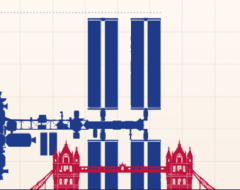
You can find game in Magnitudle.com. Every Size It Up puzzle contains two important elements: the target silhouette and a reference whose size is already fixed. The reference is the only scale information available before the answer is submitted. It can be something familiar enough to imagine in real life, such as an adult person, a doorway, a family car, a credit card, a football pitch, or a scale bar when the target is a country outline.
A normal round follows a short sequence:
- study the target and the reference;
- move the target into a useful position;
- enlarge or reduce its silhouette;
- compare the proportions visually;
- lock in the estimate;
- check the real size and score.
The reference does not move or change size. Because of this, it works like a visual ruler. If the target is a vehicle, the player might think of it as being two or three cars long. If it is an animal, the player can compare its height with the human figure. The game therefore tests proportional thinking more than memorization of exact measurements.
Moving and Resizing the Silhouette
The target can be repositioned before the answer is submitted. This is useful because two objects are easier to compare when their bases or relevant edges are aligned. A giraffe placed directly beside a person gives a clearer impression of height than the same giraffe floating higher on the board. A long vehicle can be positioned beside several imagined reference lengths to estimate its total size.
The available controls allow both large and small adjustments:
- drag the silhouette to move it;
- use a corner handle to resize it;
- use the mouse wheel to change scale;
- pinch on a touchscreen;
- use arrow keys for small position changes;
- use plus and minus keys for finer scaling.
Holding Shift allows even smaller adjustments with keyboard controls. These fine changes become useful when the estimate already looks close and the player wants to improve the final few percent.
The measurement axis also matters. Not every object is judged in exactly the same way. A giraffe is naturally compared by height, while a bus is more useful as a length comparison. Country outlines can be measured according to their greatest east-west or north-south extent. Checking what dimension is relevant before locking in an answer prevents a correct-looking comparison from being evaluated against the wrong idea of size.
What Happens After Locking In
Once the player selects Lock In, the estimate is final for that round. The game overlays the correct scale on the submitted silhouette and shows whether the target was made too large or too small. It also reveals the real measurement and the final number of points earned.
The reveal gives several pieces of information at once:
- the player’s estimated scale;
- the object’s actual measurement;
- whether the guess was too large or too small;
- the proportional difference;
- the number of points earned;
- additional information about the object.
The visual overlay is an important part of the result because it makes the error easy to understand. A numerical difference such as several metres can feel abstract, but seeing the real outline directly over the guessed silhouette shows exactly how much the scale was misjudged.
Scoring Is Based on Proportion
Size It Up does not simply subtract points according to the number of metres or centimetres between the guess and the real answer. That would make comparisons between small and large objects unfair. Being ten metres wrong about a skyscraper is very different from being ten metres wrong about a car.
Instead, scoring is proportional. What matters is the ratio between the estimated size and the real size. Guessing something at twice its actual size is treated the same as estimating it at half its real size.
Several score points illustrate how the system behaves:
- within about 6% of the correct size: 100 points;
- around 12% away: 90 points;
- about 20% away: 78 points;
- roughly one-third away: 62 points;
- half-size or double-size: 45 points;
- around three times off: 30 points;
- five times off or worse: 0 points.
Values between these examples are calculated gradually rather than jumping suddenly from one score to another. This means a slightly better estimate normally gives a slightly better result. A perfect five-round daily game therefore reaches 500 points.
What Can Appear in Size It Up?
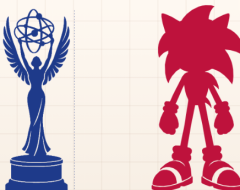
The object bank is divided into several categories. This changes the type of visual reasoning required from one round to another. Familiar everyday items may seem easy because players have handled them before, while animals and fictional characters are often seen without reliable scale references.
The available categories include:
- Animals, with creatures ranging from very small species to large mammals;
- Geography, using real country and territory outlines;
- Vehicles, including road vehicles, aircraft, ships, and other machines;
- Pop Culture, with fictional characters, creatures, and objects;
- Everyday, based on common household and personal items;
- Landmarks, using monuments and large structures;
- Space, with planets and moons shown at relative scale.
The category collection includes hundreds of silhouettes, so the same basic mechanic can move between very different types of objects.
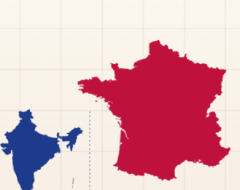
Geography works somewhat differently from the other categories. The game uses actual country outlines and measures the same shape that appears on screen. This avoids situations where the displayed map shape and the numerical size refer to different definitions. A country may need to be judged by its east-west width or north-south height depending on the outline being shown.
Landmarks create another kind of comparison. The player may recognize the Eiffel Tower, Great Pyramid of Giza, Statue of Liberty, Elizabeth Tower, Burj Khalifa, or another structure immediately, but recognizing a building does not necessarily mean knowing how large it would appear beside a person or another reference object.
Why Familiar Objects Can Still Be Difficult
One of the main challenges in Size It Up is that photographs and videos rarely preserve an intuitive sense of scale. A blue whale may be familiar from documentaries, but it is usually shown in open water. A famous fictional creature may appear beside other fictional characters whose own size is unclear. Even common items can become difficult once they are removed from the room, hand, desk, or street where players normally see them.
Several situations tend to make a round harder:
- the object is normally seen without people nearby;
- photographs use perspective that changes apparent size;
- the target is much larger or smaller than the reference;
- only a silhouette is shown, removing surface details;
- the relevant measurement is length rather than height;
- the player remembers the object’s appearance but not its scale.
This is why an everyday object can sometimes be harder than a large landmark. The silhouette removes many environmental clues that would normally help the brain judge size.
A Better Way to Estimate
Trying to remember an exact measurement is not always the most reliable strategy. If the player vaguely remembers that an animal is “around six metres” but the memory is wrong, there is little information left to correct the guess.
A more useful method is to think in multiples of the reference. Instead of asking how many metres long a vehicle is, the player can ask how many family cars would fit along its side. For an animal, it may help to imagine how many adult people would reach its full height.
A practical estimation process can look like this:
- identify the relevant dimension first;
- place both objects on the same baseline;
- compare the target with one full reference unit;
- estimate whether it is roughly two, three, or five times larger;
- make a first large adjustment;
- check the overall silhouette again;
- use small corrections only at the end.
This approach reduces the need for exact factual knowledge and uses the visual information already supplied by the game.
Common Mistakes During a Round
The game also encourages players to notice how their own perception fails. Some mistakes occur repeatedly even when the player understands the rules.
Typical problems include:
- leaving the target and reference at different vertical positions;
- focusing on one body part instead of the total measurement;
- confusing height with length;
- making very large adjustments near the end;
- assuming a familiar object must be smaller than it really is;
- relying on screen size instead of the reference;
- forgetting that the score depends on proportional error.
A particularly important mistake is comparing empty screen space instead of the two objects themselves. The silhouette can be dragged around the board, so its position has no meaning until it is deliberately aligned with the reference.
Daily Size It Up
The standard daily game consists of five silhouettes. All players receive the same set for that date, making scores directly comparable. Each round can award 100 points, so a complete set produces a result out of 500. Finishing a daily set also contributes to the game’s streak system.
A daily session can therefore be treated as five separate estimation problems:
- inspect the first target without looking up its size;
- make and lock the estimate;
- study the reveal;
- continue through the remaining objects;
- combine all five scores into the final result.
The objects do not need to belong to the same category. A single daily set can move from an animal to a vehicle, then to a fictional object, an everyday item, or a geographic outline. This prevents one specific type of size knowledge from dominating the entire game.
Unlimited and Category Play
The daily set is not the only way to play. Unlimited mode pulls random silhouettes from the larger object bank and allows repeated rounds without the daily restriction. Category pages also let players focus on one type of object instead of using a mixed selection.
The different options include:
- Unlimited for continuous random comparisons;
- Animals for biological scale;
- Geography for country outlines;
- Vehicles for machines and transport;
- Pop Culture for fictional subjects;
- Everyday for common objects;
- Landmarks and Space for larger-scale comparisons.
Past daily games also remain available, allowing older sets to be replayed. Their answer pages show the silhouettes, correct sizes, and measurement sources. Replaying an older set is separate from the current daily streak.
Learning From the Reveal
The answer screen is useful for more than scoring. It gradually creates a better internal sense of scale. If a player repeatedly underestimates large animals, vehicles, or landmarks, later rounds may become easier because previous comparisons provide new reference points.
For example, once the player has seen the real size of a double-decker bus, that bus can become an informal mental reference for future vehicles. A giraffe can become a reference for large animals. A familiar country outline can help with another geographic comparison.
This creates a form of progression without traditional levels or upgrades. The game itself does not increase a character’s statistics, but the player develops a larger set of remembered proportions.
The Central Challenge of Size It Up
Size It Up uses very few actions: look, resize, compare, and submit. The difficulty comes from the gap between recognizing something and understanding its physical scale.
A player may know exactly what a blue whale, fighter jet, movie monster, famous tower, or country looks like and still make a large error when asked to place it beside an ordinary reference. The silhouette removes context, while proportional scoring makes both overestimation and underestimation matter.
That makes every round a small experiment in visual judgment. The player studies a familiar reference, decides how many times larger or smaller the target should be, adjusts the outline, and commits to the result. Seconds later, the real scale appears directly over the guess.
There is no final boss or narrative ending. Progress comes from completing daily sets, trying more objects in Unlimited or category modes, improving scores, and gradually becoming better at estimating real-world proportions. The core loop always remains the same: see an object, decide how large it really is, resize it against a known reference, and find out whether your mental picture of its scale was accurate.
FAQ
What Is Size It Up?
Size It Up is a visual estimation game where you resize one object to match its real-world scale relative to a reference. The game then compares your estimate with the correct size and gives you a score.
How Many Rounds Are in the Daily Game?
The standard daily challenge contains five rounds. Each round uses a different object or silhouette.
How Does Scoring Work?
Each round can award up to 100 points based on how close your estimate is to the real size. A complete daily game therefore has a maximum score of 500 points.
What Types of Objects Appear?
The game includes animals, vehicles, landmarks, countries, everyday objects, space objects, and pop-culture subjects. Different categories require different kinds of size estimation.
How Do You Resize an Object?
You can drag the target silhouette and use the available resize controls to make it larger or smaller. The goal is to match its real scale compared with the fixed reference.
What Is the Reference Object?
The reference is an object with a fixed known size that helps you judge the target. It acts as a visual ruler during the round.
Does Size It Up Have Levels?
Size It Up does not use traditional numbered levels. Progress is divided into independent comparison rounds and daily sets.
Is There a Story in Size It Up?
No, the game has no storyline, characters, or narrative campaign. The entire experience is based on visual size comparison.
What Is Size It Up Unlimited?
Unlimited mode lets you play additional random size-comparison rounds without waiting for the next daily challenge. The same resizing and scoring mechanics are used.
What Is Size It Up Pop Culture?
Pop Culture mode uses fictional characters, creatures, vehicles, and objects as targets. The player estimates their official recorded size relative to a reference.
Can You Play by Category?
Yes, the game includes category-based challenges such as Animals, Geography, Vehicles, Landmarks, Everyday, Space, and Pop Culture. These modes keep the same core mechanics while changing the types of objects.
What Happens After You Lock In an Answer?
The game reveals the correct size and overlays it with your estimate. You can then see whether your target was too large or too small.
Does Exact Measurement Knowledge Matter?
Not necessarily, because the game is designed around visual comparison rather than typing exact numbers. You can estimate the target by thinking about how many times larger or smaller it should be than the reference.
What Is the Best Strategy?
Align the target with the reference and compare their overall proportions before making small adjustments. It is usually easier to think in ratios than to guess an exact measurement.
Are There Enemies or Combat?
No, Size It Up has no enemies, combat, inventory, or action mechanics. The gameplay is entirely focused on resizing objects and estimating scale.